The year 2026 marks a significant milestone in the evolution of mobile technology. No longer considered a luxury novelty or an experimental niche, foldable smartphones have officially moved into the mainstream. The “crease” that once defined early criticisms has virtually vanished, hinges have become nearly indestructible, and software ecosystems have finally caught up to the unique form factors provided by flexible displays. As consumers look to upgrade their devices this year, the competition between Samsung, Motorola, and OnePlus has reached a fever pitch, each offering a distinct vision of what a pocketable powerhouse should be.
The Landscape of Foldable Technology in 2026
Before diving into the top five devices, it is essential to understand the technological leaps that have occurred leading up to 2026. We have seen the introduction of silicon-carbon batteries, which allow for much thinner chassis without sacrificing capacity. Furthermore, the integration of generative AI directly into the silicon—most notably with the Snapdragon 8 Gen 5 and its successors—has made multitasking on a large folding screen more intuitive than ever before. Samsung continues to dominate the market share, but Motorola has captured the hearts of style-conscious users, while OnePlus remains the darling of power users who demand the best specifications for their dollar.
- Samsung Galaxy Z Fold 8: The Productivity Powerhouse
- Motorola Razr+ (2026 Edition): The Ultimate Style Statement
- OnePlus Open 3: The Spec-Heavy Challenger
- Samsung Galaxy Z Flip 8: The Compact Daily Driver
- Motorola Razr (2026 Standard): The Entry-Level Foldable Champion
1. Samsung Galaxy Z Fold 8: The Productivity Powerhouse
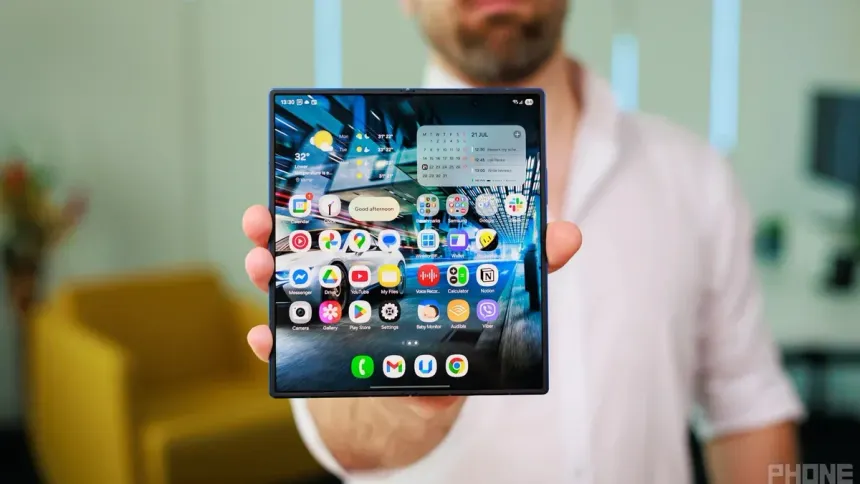
For those who view their phone as a primary workstation, the Samsung Galaxy Z Fold 8 remains the gold standard. In 2026, Samsung finally addressed the two most persistent requests from its user base: a built-in S-Pen slot and a wider cover screen that mimics a traditional smartphone aspect ratio. The Z Fold 8 utilizes the new Eco² OLED Plus technology, which reduces power consumption by 30% while increasing peak brightness to a staggering 3,500 nits, making it perfectly legible even in direct equatorial sunlight.
The software experience, powered by One UI 8.1, leverages advanced AI to predict user workflows. If you typically open Excel and Slack simultaneously at 9:00 AM, the device pre-loads these environments and suggests relevant data points from your emails. The Z Fold 8 isn’t just a phone that folds; it is a sophisticated AI assistant that happens to fit in your pocket.
- Display: 7.8-inch Dynamic AMOLED 3X internal, 6.4-inch external.
- Processor: Qualcomm Snapdragon 8 Gen 5 “For Galaxy.”
- Key Feature: Integrated S-Pen and improved Under-Display Camera (UDC) technology.
- Durability: Armor Aluminum 3.0 and IP68 water/dust resistance.
2. Motorola Razr+ (2026 Edition): The Ultimate Style Statement
Motorola has successfully reclaimed its cool factor with the Razr+ (2026). While Samsung focuses on utility, Motorola has leaned heavily into the “lifestyle” segment. The 2026 Razr+ features a full-wrap external display that covers nearly the entire top half of the device, including the camera cutouts. This allows users to perform almost any task—replying to messages, navigating via GPS, or streaming music—without ever unfolding the device.
The hinge mechanism on the 2026 model is a marvel of engineering, using a liquid metal alloy that is both lighter and stronger than previous iterations. This allows the phone to fold completely flat with zero gap, making it the thinnest foldable on the market when closed. Motorola has also partnered with high-end fashion houses to offer interchangeable vegan leather and textured glass backplates, ensuring the phone is as much a fashion accessory as it is a communication tool.
- Design: 4.2-inch pOLED cover screen with 165Hz refresh rate.
- Camera: 64MP main sensor with enhanced “Spatial Photo” capabilities.
- Battery: 4,800mAh with 65W TurboPower charging.
- Unique Selling Point: Best-in-class external screen functionality and aesthetics.
3. OnePlus Open 3: The Spec-Heavy Challenger
OnePlus disrupted the market with its original foldable, and the OnePlus Open 3 continues that legacy by offering hardware specs that often outshine its competitors. Known for the “Open Canvas” multitasking system, the Open 3 allows users to run three full-sized apps simultaneously by virtually expanding the screen area beyond the physical borders of the display. In 2026, this has been refined with haptic gestures that allow users to “flick” apps between screens with incredible precision.
The camera system on the OnePlus Open 3 is its crowning achievement. Developed in collaboration with Hasselblad, the triple-lens array features a periscope telephoto lens capable of 10x optical zoom—a rarity in the foldable world due to space constraints. By using a thinner periscope module, OnePlus has managed to keep the device sleek while offering photography that rivals traditional flagship “slabs” like the Ultra and Pro models from other brands.
- RAM/Storage: Up to 24GB of LPDDR6 RAM and 2TB of UFS 5.0 storage.
- Charging: 100W SuperVOOC, reaching 100% charge in under 25 minutes.
- Camera: Hasselblad Masters Mode with 1-inch type main sensor.
- Software: OxygenOS Fold 16, optimized for high-speed gaming and productivity.
4. Samsung Galaxy Z Flip 8: The Compact Daily Driver
The Samsung Galaxy Z Flip 8 is designed for the person who wants a normal phone that becomes small, rather than a small phone that becomes a tablet. For 2026, Samsung has introduced “Flex Mirror” technology on the cover screen, allowing it to act as a high-quality vanity mirror when the screen is off, while transforming into a high-density Super AMOLED panel when active. This model has become the most popular foldable globally due to its balanced price point and reliability.
The Z Flip 8 also sees a massive boost in battery life thanks to the dual-cell architecture and a more efficient cooling system. One of the standout features of this year’s model is the AI Portrait Studio, which uses the phone’s unique folding shape to act as its own tripod, automatically framing and editing photos for social media with professional-grade lighting effects simulated via software.
- Portability: Extremely lightweight at 182 grams.
- Display: 6.7-inch FHD+ Internal screen with 1-120Hz variable refresh.
- AI: Circle to Search 2.0 and Live Translate for 40+ languages.
- Market: Ideal for social media creators and “digital minimalists.”
5. Motorola Razr (2026 Standard): The Entry-Level Foldable Champion
Recognizing that price remains a barrier for many, the Motorola Razr (2026 Standard) is the most affordable way to enter the foldable market. By using a slightly more modest processor and a smaller external “ticker” display, Motorola has brought the price of a brand-new foldable down to the level of a mid-range traditional smartphone. However, do not mistake “affordable” for “cheap.”
The standard Razr still features the same frictionless hinge as its “Plus” sibling and supports 5G-Advanced (5.5G) networks. It is the perfect device for students and young professionals who want the benefit of a compact form factor without the $1,000+ price tag. In 2026, this device has been credited with finally killing off the “mid-range slab” market, as users opt for the folding experience over static screens.
- Price Point: Sub-$600 MSRP, making it the most accessible foldable.
- Battery Life: The most efficient in the lineup, often lasting two full days.
- Colors: Vibrant “Pantone Color of the Year” editions.
- Durability: Gorilla Glass Victus 3 protection on all surfaces.
Comparing the Big Three: Motorola, Samsung, and OnePlus
Choosing between these devices depends largely on your priorities. Samsung remains the leader in software support, offering seven years of guaranteed OS updates and the most mature ecosystem of accessories. Their devices are the most “hardened” for professional environments, featuring robust security via Knox Matrix.
Motorola has taken the lead in ergonomics and “fun.” Their software is closer to “Stock Android,” which many purists prefer, and their Moto Unplugged feature—which helps users disconnect from their digital lives—is highly rated in an age of notification fatigue. Motorola’s hardware also feels more “organic” in the hand, with curved edges and soft-touch materials that contrast with Samsung’s more industrial, angular design language.
OnePlus occupies the high-performance niche. If you are a mobile gamer or a videographer, the OnePlus Open 3 is likely your best bet. It offers the fastest charging and the most aggressive thermal management, ensuring that the phone doesn’t throttle during intense 8K video rendering or AAA gaming sessions. While their software support is slightly shorter than Samsung’s (currently at five years), the sheer power of the hardware often makes up for it.
What to Look for When Buying a Foldable in 2026
When shopping for a foldable this year, there are several key factors you must consider to ensure your investment lasts. First and foremost is Hinge Longevity. In 2026, most top-tier foldables are rated for at least 500,000 folds, which equates to over 10 years of average use. If a manufacturer does not explicitly state their fold rating, exercise caution.
Secondly, pay attention to Dust Resistance. While water resistance (IPX8) has been common for years, 2026 is the first year where true dust resistance (IP6X) has become standard in high-end foldables. If you live in a sandy or dusty environment, the Samsung Galaxy Z Fold 8 or OnePlus Open 3 are safer bets due to their sealed hinge architectures.
Finally, consider the Software Ecosystem. Does your favorite app take advantage of the folding screen? Most major apps like Instagram, YouTube, and Microsoft Office have been optimized, but niche professional software may still struggle. Samsung’s Labs feature is currently the best at forcing unoptimized apps to work correctly in multi-window modes.
Conclusion: The Future is Folded
The “Top 5” list for 2026 shows a market that has matured and diversified. Whether you are a business mogul needing the tablet-like expanse of the Samsung Galaxy Z Fold 8, a trendsetter carrying the Motorola Razr+, or a tech enthusiast pushing the limits with the OnePlus Open 3, there is finally a foldable for everyone. These devices have proven that the smartphone doesn’t have to be a static piece of glass; it can be a dynamic, shape-shifting tool that adapts to our needs.
As we move toward 2027, the rumors of triple-fold devices and rollable screens are already beginning to circulate, but for now, the refined, durable, and powerful foldables of 2026 represent the pinnacle of mobile engineering. If you have been waiting on the sidelines for the technology to “ripen,” 2026 is officially the year to make the switch.