
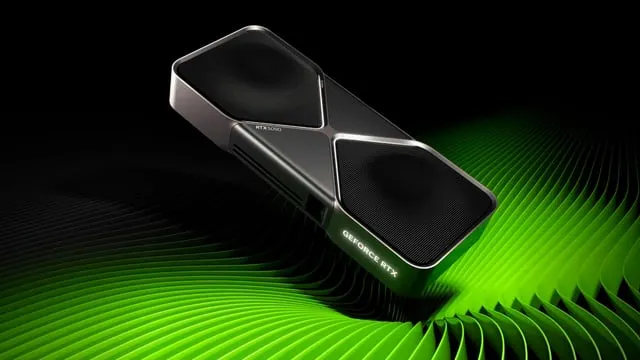
The landscape of PC gaming has undergone a radical transformation over the last few years, moving from a period of extreme scarcity to an era defined by rapid technological leaps. As we move through 2026, the central question for enthusiasts looking to build a new rig remains constant yet more complex than ever: should you invest in current hardware today, or wait for the full rollout of the NVIDIA RTX 50-series? With the Blackwell architecture promising some of the most significant performance-per-watt gains in a decade, the decision involves balancing immediate gratification against the prospect of long-term future-proofing.
The Evolution of Hardware: Why 2026 is a Turning Point
In 2026, the PC gaming market is at a crossroads. We have seen the normalization of 4K gaming as a standard rather than a luxury, and ray tracing has moved from a “gimmick” to a baseline requirement for modern AAA titles. The RTX 50-series (Ada Lovelace) served its purpose well, introducing Frame Generation and significant efficiency improvements. However, as game engines like Unreal Engine 5.5 and beyond push the limits of geometry and global illumination, the hardware requirements are scaling upwards once again.
The RTX 50-series represents more than just a numerical increase in speed. It represents a shift in how NVIDIA approaches the rendering pipeline. Built on the TSMC 3nm process node, these cards are expected to offer a massive increase in transistor density. For the builder in 2026, this means that waiting for the 50-series isn’t just about getting more frames; it’s about accessing a new suite of AI-driven technologies that will likely define the next five years of gaming.
What We Know About the RTX 50-Series (Blackwell)
While specifications can fluctuate during production cycles, the architectural foundation of the RTX 50-series is well-documented within the industry. Understanding these technical shifts is crucial for anyone deciding whether to pull the trigger on a build today.
- GDDR7 Memory: The jump to GDDR7 is perhaps the most significant hardware update. Offering much higher bandwidth and better power efficiency than GDDR6X, this allows for smoother performance at ultra-high resolutions and handles the massive data loads required by complex textures.
- Blackwell Architecture: Designed to unify gaming and AI workloads, Blackwell introduces improved Tensor Cores and RT Cores. This suggests that path tracing—the most demanding form of ray tracing—could finally become viable at high frame rates without heavy reliance on aggressive upscaling.
- PCIe 5.0 Integration: While PCIe 4.0 is still plenty for many, the RTX 50-series fully utilizes the PCIe 5.0 interface, ensuring that data transfer between the GPU and the rest of the system is never a bottleneck.
- DLSS 4 (and beyond): Historically, each major NVIDIA architecture introduces a new version of Deep Learning Super Sampling. In 2026, we are looking at DLSS 4, which is rumored to incorporate even more advanced neural rendering techniques, potentially including AI-generated textures or physics.
The Case for Waiting: Future-Proofing in an AI-Driven Era
If you are currently rocking an older card, such as an RTX 30-series or even a high-end 20-series, the argument for waiting is incredibly strong. Building a PC in 2026 with a “last-gen” card might save you a few hundred dollars initially, but you may find yourself struggling with new releases by 2028. The RTX 5090 and 5080 are positioned to be the first cards capable of truly “maxing out” 4K 240Hz monitors, which are becoming more affordable in the 2026 market.
Furthermore, the DisplayPort 2.1 support expected in the 50-series is a major factor. As 8K displays and ultra-high refresh rate 4K OLEDs become the standard for high-end setups, having a GPU that can actually output those signals without compression is vital for visual fidelity. If you are a professional creator or a gamer who values the “bleeding edge,” the 50-series is essentially mandatory.
The Case for Building Now: Diminishing Returns and Availability
On the other side of the coin, there is a valid argument for not waiting. The “wait for the next big thing” cycle is endless in the tech world. By the time the RTX 50-series is fully available at MSRP, rumors of the RTX 60-series will already be circulating. There are several reasons why building with an RTX 40-series Super or a high-end AMD Radeon card in 2026 might be the smarter move:
- Price Stability: New GPU launches are notoriously volatile. The MSRP of a 50-series card is likely to be high, and scalper activity often plagues the first six months of a launch. Current-gen cards have settled into predictable pricing.
- Mature Drivers: The 40-series has had years of driver optimizations. When you buy a 4080 Super in 2026, you are getting a stable, well-understood piece of hardware. New architectures often launch with software bugs that take months to iron out.
- The Power Requirement: The RTX 50-series, particularly the flagship models, are expected to have high TDP (Thermal Design Power) ratings. This may require you to upgrade your Power Supply to a high-wattage ATX 3.1 unit and ensure your case has exceptional airflow, adding further cost to your build.
- Immediate Needs: If your current PC is failing or you are unable to play the latest titles at acceptable settings, waiting six to nine months for a GPU release is a long time to miss out on gaming.
Component Synergy: Building the Rest of the PC
Building a PC in 2026 isn’t just about the GPU. To truly leverage the power of an RTX 50-series card, the rest of your components must be up to the task. If you decide to wait for the new NVIDIA cards, you should also plan your build around the following standards:
The Processor (CPU): By 2026, we are looking at Intel’s 16th Gen or AMD’s Ryzen 9000/10000 series. A bottlenecked GPU is a waste of money. To pair with a 50-series card, a CPU with high single-core clock speeds and at least 8 performance cores is essential. The Ryzen 7 9800X3D (or its successor) remains the gold standard for gamers due to its massive L3 cache.
Memory (RAM): 16GB is no longer the standard. For a high-end 2026 build, 32GB of DDR5-8000+ is the sweet spot. Many modern games are beginning to utilize more system memory for background assets, and high-speed DDR5 helps keep 1% low frame rates stable.
Storage: Do not settle for anything less than a Gen5 NVMe SSD. With the implementation of DirectStorage in almost all major titles by 2026, the speed at which your GPU can pull data from your drive is critical for eliminating loading screens and in-game hitching.
Power and Cooling: The Hidden Costs
One of the biggest hurdles of the 50-series will likely be the thermal and power demands. We have seen a trend of GPUs becoming larger and hungrier. In 2026, a 1000W or 1200W power supply is no longer “overkill” for a high-end build; it is a safety margin. Furthermore, the 12V-2×6 power connector (an evolution of the 12VHPWR) is now the industry standard. Ensuring your PSU natively supports this without adapters is a key consideration for building in 2026.
Cooling is another factor. If you are waiting for an RTX 5090, you need to ensure your case can accommodate a card that may be 3.5 to 4 slots thick and over 340mm in length. Many builders in 2026 are opting for dual-chamber cases or full-tower rigs to provide the necessary air volume to keep these massive chips cool under load.
The Competitive Landscape: What About AMD and Intel?
While NVIDIA holds the crown for features like ray tracing and DLSS, it would be a mistake to ignore AMD’s RDNA 4/5 or Intel’s Battlemage/Celestial lineups in 2026. AMD has consistently offered better Price-to-Rasterization ratios. If you don’t care about ray tracing or AI-upscaling, an AMD card might provide more raw performance for your dollar, allowing you to build your PC sooner without the “NVIDIA tax.”
Intel, meanwhile, has become a serious contender in the mid-range market. If your goal is 1440p gaming, waiting for an RTX 50-series might be unnecessary when an Intel Arc Celestial card could provide comparable performance at a fraction of the cost. The diversity of the market in 2026 is a win for consumers, but it requires more research than ever before.
Final Verdict: Should You Wait?
The decision to wait for the RTX 60-series in 2026 depends entirely on your current hardware and your gaming goals. If you are a 1080p competitive gamer playing titles like Valorant or Counter-Strike 2, waiting for a 50-series card is likely unnecessary; current hardware already hits the refresh rate caps of most monitors. However, for those aiming for 4K Ultra settings, VR enthusiasts, or those interested in local AI development, waiting is the correct choice.
Building a gaming PC is an investment in your entertainment for the next several years. In 2026, the leap from the 40-series to the 50-series is expected to be more than just incremental—it is a generational shift in how games are rendered. If you can hold out for a few more months, the efficiency gains of GDDR7 and the power of the Blackwell architecture will likely make the wait well worth it. However, if you are building from scratch today, the RTX 40-series Super cards remain highly capable workhorses that won’t become obsolete overnight.
Ultimately, the best time to build a PC is when you need it. But in the specific context of 2026, with the 50-series on the horizon, the “wait and see” approach has never been more tempting. Ensure your motherboard and power supply are ready for the future, and keep an eye on the benchmarks. The next era of PC gaming is almost here, and it promises to be spectacular.