
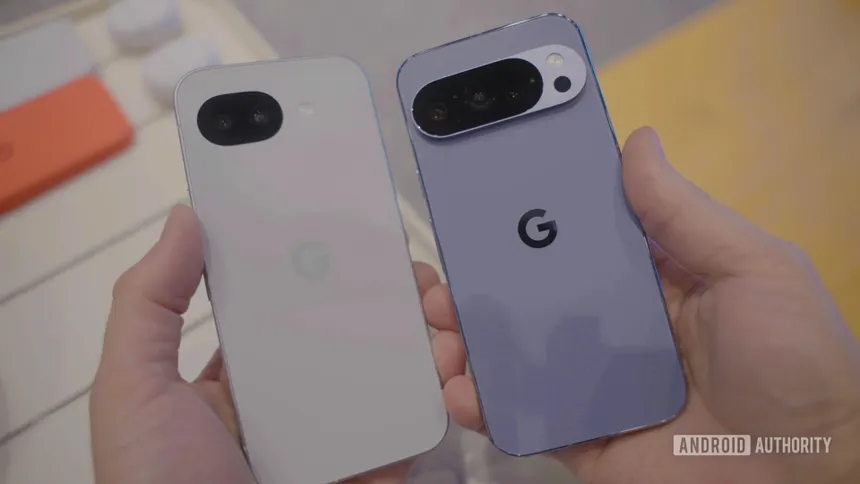
The smartphone landscape is on the cusp of a significant transformation with the anticipated arrival of the Google Pixel 10 series. For years, Google has positioned itself not just as a hardware manufacturer, but as a leader in computational photography and integrated artificial intelligence. As we look forward to the battle between the Google Pixel 10a and the Google Pixel 10 Pro, the central question for consumers remains: which device offers the best value? While the “Pro” models represent the pinnacle of Google’s engineering, the “a-series” has historically been the “sweet spot” for budget-conscious tech enthusiasts. With the introduction of the Tensor G5 chip, this gap may be narrowing or widening in unexpected ways.
The Heart of the Machine: Tensor G5 and AI Parity
The defining feature of the Pixel 10 generation is the move to the Tensor G5 processor. Unlike previous iterations that were co-developed with Samsung, the G5 is rumored to be Google’s first fully custom-designed silicon, manufactured on TSMC’s 3nm process. This is a monumental shift for both the Pixel 10 Pro and the Pixel 10a. In the past, the “a-series” often received a slightly underclocked version of the flagship chip or lacked the thermal management to sustain high performance. However, with the Pixel 10a, Google is expected to maintain AI parity.
What does AI parity mean for the average user? It means that the high-end generative AI features found on the Pro—such as Magic Editor, Best Take, and real-time Gemini Nano integration—will likely be available on the more affordable Pixel 10a. Because Google’s value proposition relies on software-driven experiences, they cannot afford to gate-keep the “smarts” of the phone behind a $1,000 paywall. Consequently, the Pixel 10a becomes an incredible value proposition for those who want the smartest phone in the room without the premium price tag.
Camera Hardware: The Pro’s Edge
While the software might be similar, the physical hardware remains the primary differentiator. The Pixel 10 Pro is expected to feature a triple-lens system that caters to professional-grade needs. Historically, the Pro models have utilized larger sensors that capture more light, leading to better performance in low-light environments and a more natural bokeh effect.
- Main Sensor: The Pro will likely feature a 50MP primary sensor with a wider aperture, while the 10a might use a 64MP sensor with smaller pixels.
- Telephoto Lens: This is the deal-breaker for many. The Pixel 10 Pro will feature a dedicated periscope telephoto lens (likely 5x optical zoom), whereas the Pixel 10a will rely on Super Res Zoom (digital cropping) from its main sensor.
- Ultrawide: The Pro’s ultrawide lens usually doubles as a macro lens, a feature often omitted from the a-series.
For users who frequently photograph wildlife, sports, or architectural details from a distance, the Pixel 10 Pro’s hardware is indispensable. However, for the “point-and-shoot” user who primarily takes photos of people, food, and landscapes for social media, the Pixel 10a provides 90% of the quality at 50% of the cost. The AI handles the heavy lifting, cleaning up noise and optimizing dynamic range so effectively that the hardware differences are often invisible on a smartphone screen.
Display and Build Quality: Luxury vs. Utility
The tactile experience of holding a Pixel 10 Pro versus a Pixel 10a is where the price difference becomes most tangible. The Pixel 10 Pro will likely utilize an LTPO OLED display, capable of scaling its refresh rate from 1Hz to 120Hz. This not only makes the interface feel butter-smooth but also significantly preserves battery life. The 10 Pro is also expected to feature Gorilla Glass Victus 2 and a polished stainless steel or matte titanium frame.
In contrast, the Pixel 10a will likely stick to a more functional design. Expectations include:
- A 120Hz “Actua” display, but without the LTPO technology, meaning it won’t be as power-efficient.
- A build consisting of 3D thermoformed composite (high-grade plastic) and an aluminum frame.
- Thicker bezels compared to the nearly edge-to-edge look of the Pro.
Is the premium build worth it? For some, the weight and feel of a Pro device signify quality. For others, a plastic back on the 10a is actually a benefit—it is more durable against drops and doesn’t require a case as urgently as a glass-sandwich phone does. Furthermore, the Pixel 10a is generally smaller and more ergonomically friendly for one-handed use.
Video Capabilities: The Next Frontier for AI
Google has historically lagged behind Apple in video quality, but the Pixel 10 series aims to bridge that gap using Video Boost and Night Sight Video. The Pixel 10 Pro will undoubtedly be the flagship for these features, utilizing the Tensor G5’s powerful NPU (Neural Processing Unit) to process 4K video in the cloud or locally for HDR enhancement.
The Pixel 10a will benefit from these advancements, but it may face limitations in frame rates or resolution. While the Pro might support 8K recording or 4K at 120fps, the 10a will likely be capped at 4K/60fps. However, for most users, the ability to use Audio Magic Eraser to remove wind noise from a video of a child’s birthday party is more valuable than raw resolution. Since these features are software-based, the Pixel 10a remains a powerhouse for casual content creators.
Battery Life and Charging Speeds
Value is often measured in longevity—how long the phone lasts during the day and how long it lasts over the years. The Pixel 10 Pro will house a larger battery and, more importantly, support faster wired and wireless charging. We expect the Pro to support at least 30W or 45W charging, while the 10a has traditionally been stuck at a slower 18W or 21W rate.
However, the Pixel 10a often surprises users with its endurance. Because it has a slightly smaller, lower-resolution screen, it puts less strain on the battery. If the Tensor G5 proves to be as efficient as the rumors suggest, the Pixel 10a could easily be a “two-day phone” for light users. Both phones will benefit from Google’s promise of seven years of software updates, ensuring that the “value” of the 10a extends well into the 2030s.
Price Comparison: The Bottom Line
To determine the better value, we must look at the projected pricing. The Pixel 10a is expected to retail for approximately $499 to $549. The Pixel 10 Pro is expected to start at $999.
For $450 extra, the Pro offers:
- A dedicated 5x optical telephoto lens.
- A superior LTPO display with higher peak brightness.
- More RAM (potentially 16GB vs 8GB or 12GB in the 10a).
- Faster charging and more premium materials.
- Advanced video features like Video Boost.
When you break it down, you are essentially paying double the price for the Pro. While the Pro is undoubtedly the “better” phone, it is rarely “twice as good” as the a-series for the average consumer. The Pixel 10a offers the same core Android 15/16 experience, the same Gemini AI integration, and a main camera that rivals the best in the industry.
Who Should Choose the Pixel 10 Pro?
The Pixel 10 Pro is designed for the power user and the creative professional. If you use your phone as your primary camera for photography or vlogging, the hardware upgrades are justifiable. The Pro is also the better choice for mobile gamers who need the extra RAM and better thermal dissipation provided by the larger chassis. Finally, if you consume a lot of media, the larger, brighter, and more vivid display of the Pro provides a significantly better cinematic experience.
Who Should Choose the Pixel 10a?
The Pixel 10a is the champion of the “everyday user.” It is for the person who wants a phone that is smart, reliable, and takes amazing photos of their family and pets without needing to fiddle with manual settings. It is for the student, the budget-conscious professional, or the parent who wants flagship-level security features and AI convenience without the luxury tax. In terms of dollar-per-feature, the Pixel 10a is almost impossible to beat.
The Impact of the Tensor G5 Transition
It is important to emphasize how the TSMC-made Tensor G5 changes the value equation. Previous Pixels suffered from thermal throttling and occasional connectivity issues due to the Samsung modems and manufacturing process. By moving to TSMC, Google is expected to significantly improve efficiency and heat management. This means the Pixel 10a will likely be more powerful than the Pixel 9 Pro. This “generational leap” makes the 10a an even more attractive value, as it won’t feel like a “compromised” device in terms of raw speed.
Conclusion: The Verdict on Value
In the battle between the Pixel 10a and the Pixel 10 Pro, the title of “Better Value” undeniably goes to the Pixel 10a. Google has mastered the art of the mid-range phone by ensuring that the most important features—the AI software and the primary camera quality—are not sacrificed.
The Pixel 10 Pro is a magnificent piece of technology, a “no-compromise” flagship that pushes the boundaries of what a smartphone can do. However, the Pixel 10a represents the democratization of that technology. It offers the future of AI at a price point that is accessible to the masses. Unless you specifically require the optical zoom of the telephoto lens or the absolute highest display specs for professional use, the Pixel 10a provides a nearly identical daily experience for hundreds of dollars less. For most people, the Pixel 10a isn’t just the better value—it’s the smarter choice.