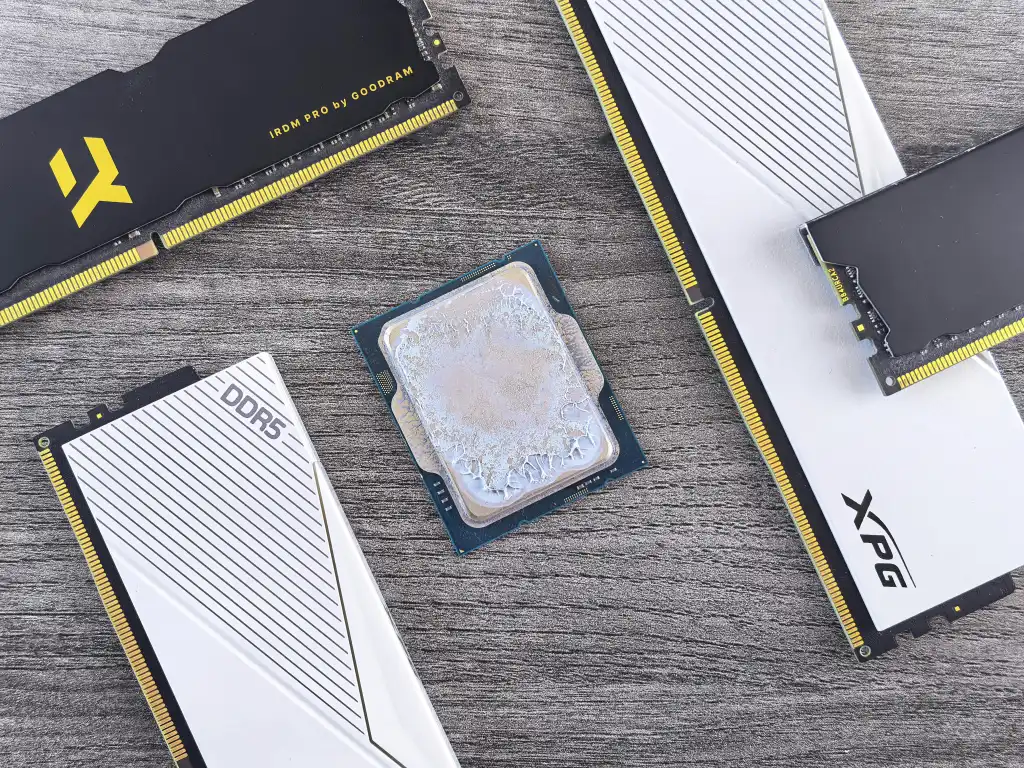
The year 2026 has arrived with a silent but devastating blow to the PC enthusiast and professional workstation markets. If you have browsed online retailers lately, you have likely noticed a jarring reality: the era of affordable high-capacity storage and lightning-fast memory has come to an abrupt, expensive halt. After a period of relative stability in the mid-2020s, PC RAM and SSD prices have surged to levels not seen in over a decade. For many builders, a 4TB NVMe drive or a 64GB kit of DDR6 memory now costs as much as a mid-range GPU did just a few years ago.
This price hike isn’t the result of a single catastrophic event, but rather a perfect storm of technological transitions, shifting industrial priorities, and global economic pressures. To understand why your next PC upgrade might break the bank, we must look at the intricate web of semiconductor manufacturing and the insatiable hunger of the Artificial Intelligence revolution.
The AI Hegemony: Why Servers Are “Stealing” Your RAM
The single most significant factor driving up the cost of consumer memory in 2026 is the AI infrastructure boom. While we often think of AI as software, its physical backbone is built on High Bandwidth Memory (HBM) and high-density DDR5/DDR6 modules. Major manufacturers like Samsung, SK Hynix, and Micron have shifted a massive portion of their production capacity away from consumer-grade components to meet the demands of enterprise AI data centers.
When a manufacturer chooses to produce a single wafer of HBM4 (the current gold standard for AI accelerators), they are effectively choosing not to produce dozens of consumer DDR6 sticks. The profit margins on enterprise AI chips are significantly higher, leading to a “cannibalization” of production lines. In 2026, the consumer is no longer the primary customer for memory fabs; they are an afterthought in the shadow of trillion-dollar tech giants building massive neural networks.
- Priority Shifting: Over 60% of global DRAM production is now allocated to enterprise and AI sectors.
- Complexity: HBM4 requires complex stacking technologies that lower the overall yield of usable silicon per wafer.
- Price Cascading: As supply for high-end chips tightens, the scarcity trickles down, raising the price of even basic 16GB modules.
The Transition to DDR6 and PCIe Gen 6
2026 marks the widespread adoption of DDR6 memory and PCIe Gen 6 storage interfaces. Historically, any transition to a new hardware standard results in a price premium, but the current shift is particularly expensive. DDR6 offers double the bandwidth of its predecessor, but it requires more sophisticated PCB designs and higher-quality shielding to maintain signal integrity at extreme speeds.
Similarly, Gen 6 SSDs require advanced controllers that can handle massive throughput without overheating. This has led to a surge in the cost of NAND flash controllers. Manufacturers are passing these research and development costs directly to the consumer. Furthermore, the “early adopter tax” is more punishing than ever because the machinery required to produce these next-gen chips—specifically Extreme Ultraviolet (EUV) lithography machines—is in extremely short supply and costs hundreds of millions of dollars per unit.
Geopolitical Friction and “Chip Nationalism”
We cannot discuss hardware prices without addressing the geopolitical climate of 2026. The push for sovereign semiconductor manufacturing has led to a fragmented global supply chain. While initiatives like the CHIPS Act in the United States and similar programs in Europe have led to the opening of new domestic fabs, these facilities are not yet operating at the peak efficiency of established hubs in Taiwan and South Korea.
Moreover, trade restrictions and “chip nationalism” have led to increased tariffs and logistical hurdles. Moving raw materials like neon gas (essential for lasers) or rare earth elements from one region to another has become a bureaucratic and financial nightmare. These costs are embedded in every stick of RAM and every SSD that reaches your doorstep. The globalization that once kept PC parts cheap has been replaced by a more expensive, localized, and resilient—but costly—model.
The NAND Flash Crisis: Why SSDs Are No Longer “Cheap”
For years, SSD prices followed a downward trajectory, making 2TB and 4TB drives the standard for even budget builds. However, in 2026, the 3D NAND stacking race has hit a physical and financial ceiling. Manufacturers are now pushing 300+ layers in their flash memory chips, but the “yield rates” (the percentage of functional chips per wafer) have plummeted. Producing 300-layer NAND is exponentially more difficult than 176-layer NAND, and the failure rate during production is significantly higher.
Additionally, the demand for all-flash data centers has surged. Large corporations are replacing traditional mechanical hard drives with massive SSD arrays to save on electricity and cooling costs. This pivot has drained the global supply of NAND flash, leaving consumer SSD brands fighting over the remaining inventory. The result is a market where 1TB is once again becoming the “safe” standard, and 8TB drives have moved back into the realm of luxury items.
The Impact on Different User Segments
The skyrocketing prices are not affecting everyone equally. Depending on how you use your PC, the 2026 market presents different levels of frustration:
- Gamers: With modern titles requiring 32GB of RAM as a baseline and 150GB+ of storage space, gamers are feeling the squeeze. Many are forced to choose between a faster GPU or sufficient memory.
- Content Creators: Video editors and 3D artists who rely on 128GB of RAM and multi-terabyte scratch disks are facing build costs that are 40-50% higher than in 2024.
- Budget Builders: The “sub-$800” PC build has virtually vanished. It is now nearly impossible to build a modern system with respectable specs without exceeding a four-figure budget.
What to Do About It: Strategies for the 2026 Market
While the situation is grim, you are not entirely powerless. Navigating a high-priced market requires a change in strategy. Instead of following the traditional “buy the latest and greatest” mantra, consider the following cost-saving tactics to keep your build within budget.
1. Buy for Today, Not Tomorrow
In a low-price market, “future-proofing” is a wise strategy. In 2026, it is a liability. Do not buy 64GB of RAM if your primary use case is gaming; 32GB remains more than enough for the vast majority of titles. Similarly, don’t pay the premium for a Gen 6 NVMe drive if you are not doing heavy 8K video editing. A Gen 4 or Gen 5 drive is still incredibly fast and significantly cheaper as retailers look to clear out “older” inventory.
2. Embrace the Secondary Market
The refurbished and used market has become a goldmine in 2026. RAM, in particular, is a very durable component with a low failure rate. Buying high-quality DDR5 kits from reputable second-hand sellers can save you 30-40%. For SSDs, exercise more caution due to “write endurance” concerns, but many professional liquidators sell drives with 95%+ health remaining at a fraction of the cost of new retail units.
3. Optimize Your Existing Storage
Before rushing to buy a new $300 SSD, audit your current storage. We often fill our drives with “digital hoarding”—old game installs, redundant backups, and uncompressed media. Tools like WinDirStat or WizTree can help you identify space hogs. Additionally, consider using cloud storage for cold data (files you rarely access) to free up your expensive local NVMe space for applications that actually need the speed.
4. Re-evaluate External Solutions
Interestingly, external SSDs sometimes go on sale more frequently than internal M.2 drives due to different retail cycles and bundling. It is often possible to buy an external USB4 SSD, “shuck” it (remove it from the casing), and install the internal drive into your PC. While this can void the warranty, the savings in 2026 often outweigh the risks for tech-savvy users.
5. Look for “Last-Gen” Bundles
As retailers struggle to move inventory of DDR5 motherboards to make room for the DDR6 transition, you can find excellent motherboard and RAM bundles. Sticking with a refined DDR5 platform might mean you lose 5-10% in theoretical peak performance, but the hundreds of dollars saved can be reinvested into a better GPU or CPU, which will provide a more noticeable real-world benefit.
The Long-Term Outlook: When Will Prices Drop?
Economists and industry analysts predict that the memory super-cycle will begin to cool toward the end of 2027. By then, the initial wave of AI infrastructure build-outs will be complete, and the “second wave” of domestic semiconductor fabs in the US and Europe will be reaching full production capacity. Until then, we are in a period of “hardware austerity.”
The skyrocketing prices of 2026 serve as a reminder of how interconnected our digital lives are with global manufacturing and corporate priorities. While we wait for the market to stabilize, the best tool at your disposal is patience and research. By understanding the causes of the price hikes—from AI demand to manufacturing yields—you can make informed decisions that allow you to maintain a high-performance PC without falling into a financial trap.
In conclusion, while 2026 is undoubtedly the most expensive year to be a PC enthusiast in recent memory, it is also a year that rewards cleverness over raw spending. Whether it’s through optimizing current hardware, scouting the used market, or simply opting for the previous generation’s stable technology, there are still ways to enjoy the PC hobby. The silicon may be more expensive, but the community’s ingenuity remains as free as ever.