
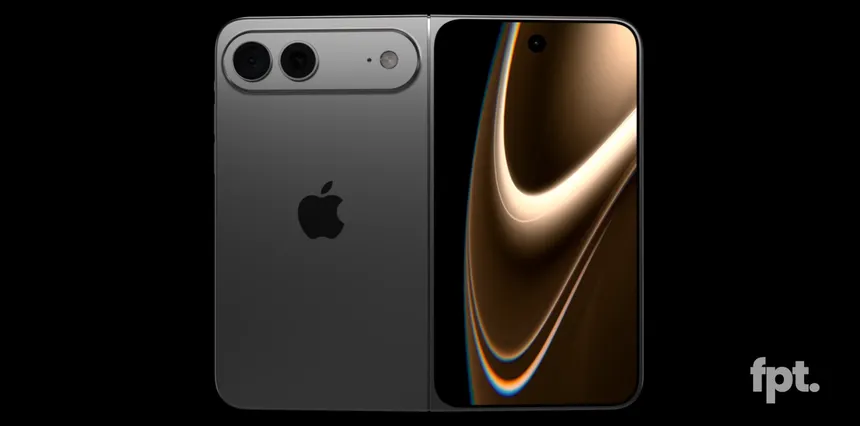
The relentless march of innovation in the smartphone industry often feels like peering into a crystal ball, each year bringing new marvels that redefine our digital lives. As we stand at the cusp of mid-decade, the year 2026 looms large on the horizon, promising a fresh wave of devices poised to push the boundaries of technology, design, and user experience. While specifics remain shrouded in the secrecy of R&D labs, industry whispers, patent filings, and logical technological progressions allow us to paint a compelling picture of the flagship smartphones that are yet to grace our pockets and palms. This article delves into the speculative yet exciting world of 2026’s unlaunched titans, exploring what innovations we can expect from the leading manufacturers and how these devices will fundamentally change our interaction with the digital realm.
The Evolution of the Smartphone: What 2026 Promises
Before diving into individual manufacturers, it’s crucial to understand the overarching trends that will shape the smartphone landscape in 2026. The focus will undoubtedly shift further beyond raw processing power, emphasizing seamless integration of Artificial Intelligence, advanced computational photography, sustainable design, and revolutionary display and battery technologies. Connectivity will become even more ubiquitous, and the lines between our physical and digital worlds will blur further.
Here are some of the key technological pillars we anticipate for 2026:
- Hyper-Integrated AI: Far beyond current NPU capabilities, 2026 devices will feature deeply embedded generative AI models, capable of real-time, on-device processing for tasks like advanced photo editing, contextual assistance, personalized content creation, and truly proactive scheduling. This will translate into a more intuitive, anticipatory, and personalized user experience.
- Revolutionary Camera Systems: While megapixel counts might plateau, the focus will be on larger sensors, variable apertures, periscope lenses with unprecedented optical zoom capabilities (e.g., 20x optical zoom becoming more common), and multi-lens arrays that work in concert to capture light and detail like never before. Computational photography will be indistinguishable from optical perfection, even in challenging conditions.
- Sustainable and Durable Design: Expect a stronger emphasis on recycled materials, modular components for easier repairability, and potentially even user-replaceable batteries making a limited comeback in some models. Durability will extend beyond IP ratings, with next-generation ceramic or advanced alloy frames and significantly tougher display glass.
- Advanced Display Technologies: Under-display cameras (UDC) will likely achieve near-perfection, making notches and punch-holes relics of the past across flagship models. Variable refresh rates will become even more dynamic, perhaps ranging from 1Hz to 180Hz or even higher for incredibly smooth scrolling and power efficiency. Brighter, more color-accurate, and energy-efficient LTPO 4.0 or 5.0 panels will be standard.
- Next-Generation Battery and Charging: Solid-state battery technology, while perhaps not mainstream, might debut in ultra-premium models, offering significant density improvements. Charging speeds will push past 200W wired, with wireless charging becoming equally rapid and potentially enabling truly contact-less, short-range charging solutions.
- Beyond 5G Connectivity: While 6G standards will still be in development, 2026 flagships will feature advanced 5G modems capable of higher bandwidth, lower latency, and better network slicing, laying the groundwork for future evolutions. Wi-Fi 7 will be standard, providing unprecedented local network speeds.
The Contenders: Flagships to Watch in 2026
Now, let’s explore the likely offerings from the major players, projecting their strengths and potential innovations.
Apple: iPhone 18 Pro and iPhone 18 Ultra
Apple’s 2026 lineup, likely the iPhone 18 Pro and a potential new top-tier iPhone 18 Ultra, will build on its legacy of tight hardware-software integration. Expect a new ‘A18 Bionic’ or ‘M-series’ chip, pushing neural engine capabilities to unprecedented levels, enabling seamless on-device AI for tasks like real-time video manipulation, advanced health monitoring, and personalized digital assistants that truly understand context and intent.
The design language might evolve, perhaps refining the titanium chassis with even more durable finishes and possibly an even thinner profile, thanks to component miniaturization. The display will undoubtedly feature a perfectly invisible under-display Face ID and front camera system, offering an uninterrupted edge-to-edge viewing experience. ProMotion X technology could allow for refresh rates ranging from a power-saving 1Hz up to an ultra-smooth 180Hz.
Camera improvements will be significant. The iPhone 18 Pro Max/Ultra could introduce a larger main sensor, perhaps 1-inch or even larger, capturing significantly more light. A multi-element periscope zoom lens with 10x or 15x optical magnification is a strong possibility, further blurring the lines between smartphone and professional camera. Expect advancements in ProRes video recording, computational photography for low-light performance, and potentially even 8K spatial video capture for future Apple Vision devices. Battery life will see incremental improvements, possibly aided by more efficient internal components and advanced solid-state-like battery tech.
Samsung: Galaxy S26 Ultra, Galaxy Z Fold6, and Galaxy Z Flip6
Samsung, a pioneer in many smartphone technologies, will undoubtedly continue its aggressive innovation in 2026. The Galaxy S26 Ultra will remain the benchmark for Android flagships. It’s almost certain to feature a further refined under-display camera, delivering a truly uninterrupted Infinity-O display with peak brightness levels exceeding 3000 nits and an even more robust Ultra-thin Glass (UTG).
The camera system will be its crowning glory. Imagine a 200MP or 250MP main sensor with advanced pixel-binning technology, accompanied by not one, but two or three periscope zoom lenses offering varied optical magnifications (e.g., 5x, 10x, and potentially an entirely new 20x optical zoom lens). Video capabilities will push 8K recording at higher frame rates (60fps) and introduce advanced real-time AI-powered stabilization and subject tracking. The S Pen will likely gain new, more intuitive gesture controls and even lower latency.
For foldables, the Galaxy Z Fold6 and Galaxy Z Flip6 will mature significantly. The Fold6 will boast a virtually crease-less main display, potentially using a new hinge mechanism and UTG. Both the inner and outer displays will be brighter and more durable. Battery life in foldables, a common pain point, will see substantial improvements, perhaps through innovative dual-battery designs and more power-efficient chipsets (likely the Snapdragon 8 Gen 6 for Galaxy or an advanced Exynos chip). Expect the Z Flip6 to further streamline its form factor and offer even more utility for its cover screen, perhaps evolving into a full mini-display with advanced interaction capabilities.
Google: Pixel 11 Pro
Google’s Pixel line has always been about the symbiotic relationship between hardware and software, particularly its prowess in AI and computational photography. The Pixel 11 Pro in 2026 will undoubtedly take this to new heights. Powered by the third or fourth generation of Google’s custom Tensor chip, the ‘Tensor G6’ or ‘G7’, the Pixel 11 Pro will feature an AI core vastly superior to anything seen before, enabling truly revolutionary on-device machine learning. This could manifest in:
- Predictive User Interfaces: The phone anticipates your next action, pre-loading apps, suggesting responses, or even initiating tasks based on context.
- Unparalleled Computational Photography: Imagine a “Pro Vision” mode that uses AI to perfectly light and compose every shot, even correcting for focus errors or motion blur post-capture with startling accuracy. Real-time video processing will be transformative, offering cinematic depth and color grading on the fly.
- Advanced Health and Wellness Features: Utilizing new sensors, the Pixel 11 Pro could offer non-invasive blood glucose monitoring, advanced sleep analysis, or even early detection of certain health conditions through vocal or retinal pattern changes, all processed on-device for privacy.
Design-wise, expect a continued refinement of the Pixel aesthetic, with an emphasis on premium materials and perhaps a completely seamless design, integrating an under-display front camera. Google might also push the boundaries of haptics, offering a more nuanced and responsive tactile feedback system that integrates with its AI-driven interface. Battery efficiency will be a major focus, leveraging the Tensor chip’s capabilities for smart power management.
OnePlus: OnePlus 15 Pro
OnePlus has always carved a niche for itself with blazing-fast performance, rapid charging, and a clean software experience. The OnePlus 15 Pro in 2026 will continue this tradition, but with a refined focus. It will likely feature the absolute latest Snapdragon flagship chip, coupled with an optimized OxygenOS (or whatever its iteration will be called) that offers unparalleled fluidity and speed.
Charging technology will remain a significant selling point, with wired charging potentially exceeding 250W, capable of fully charging the device in under 10 minutes. Wireless charging will also see massive improvements, nearing wired speeds. The display will be a top-tier LTPO panel with extreme brightness and a dynamic refresh rate, possibly pushing past 165Hz. Camera hardware, often an area where OnePlus played catch-up, will see further collaboration (e.g., with Hasselblad), focusing on larger sensors, improved low-light performance, and more versatile zoom capabilities, including a capable periscope lens. OnePlus may also differentiate itself by focusing on a purer Android experience with fewer pre-installed apps and bloatware, emphasizing performance and customization.
Xiaomi: Xiaomi 17 Ultra
Xiaomi has consistently pushed the envelope in terms of hardware specifications and value, often being the first to market with cutting-edge components. The Xiaomi 17 Ultra in 2026 will undoubtedly be a technological showcase. Expect it to feature the most advanced camera system, likely building on its Leica partnership, with a colossal 1-inch (or larger) main sensor, perhaps reaching 300MP or more, capable of incredible detail and light capture. Multiple periscope lenses with varying zoom levels (e.g., 5x, 15x, and a new 30x optical hybrid) could offer unprecedented photographic flexibility.
Charging will be another highlight, with Xiaomi often leading the pack. We could see wired charging speeds hitting 300W or beyond, coupled with extremely fast wireless charging. The display will be a bleeding-edge panel, potentially a 3K or 4K resolution LTPO 5.0 screen with ultra-high brightness and a seamless under-display front camera. Xiaomi’s HyperOS (or its successor) will offer deep customization and AI-driven features, leveraging the immense power of the latest Snapdragon flagship processor.
The Xiaomi 16 Ultra might also experiment with novel materials, perhaps incorporating advanced ceramics, titanium, or even sustainable, bio-engineered components in its chassis, offering both durability and a unique aesthetic.
Beyond the Hype: A Deeper Look at Key Innovations
AI as the Operating System Itself
By 2026, AI won’t just be a feature; it will be the underlying fabric of the mobile operating system. Imagine a smartphone that truly understands your routines, preferences, and even emotional state through subtle cues. It could proactively manage notifications, suggest relevant information before you even ask, optimize battery usage based on your predicted schedule, and even generate personalized content – from unique wallpapers to AI-composed music – on the fly. This level of ambient intelligence will redefine the user experience, making interactions feel less like commanding a device and more like collaborating with an intelligent companion.
Camera Systems: Optics Meets Algorithms
The megapixel war will be largely over, replaced by a battle for optical perfection and computational wizardry. Larger sensors (approaching APS-C sizes in some flagships) will gather more light, enabling stunning native dynamic range. Variable aperture lenses will become more common, offering greater control over depth of field. The true magic, however, will lie in the fusion of advanced optics with next-gen AI algorithms. Features like “cinematic re-focus” (changing focus point after video capture) will be commonplace, and AI will be able to reconstruct lost detail, remove unwanted objects, and even generate entirely new elements into photos and videos with incredible realism.
Battery Breakthroughs and Energy Management
While solid-state batteries are the holy grail, even incremental improvements in traditional Li-ion technology combined with advanced energy management chips and OS-level optimizations will yield noticeable gains. Faster charging will be a given, but the focus will also shift to battery longevity, with AI-powered charging routines that learn user habits to preserve battery health over years. Energy harvesting technologies, such as advanced solar charging via the display or chassis, might even make an appearance, offering trickle charging in ambient light.
The Foldable Frontier: Crease-less and Seamless
Foldable phones in 2026 will have largely overcome their initial hurdles. Hinges will be imperceptible, creases non-existent, and durability comparable to traditional flagships. We might even see new form factors, such as rollable or slide-out displays, offering dynamic screen sizes that adapt to content. The software experience will be deeply optimized for these adaptable screens, seamlessly transitioning applications and multitasking across different configurations.
Connectivity: Beyond Speed
While 6G is still a few years off, 2026 devices will refine 5G capabilities, offering more reliable connections in crowded areas, ultra-low latency for cloud gaming and augmented reality, and enhanced security features embedded at the hardware level. Satellite connectivity for emergency calls and basic messaging, similar to current offerings, will likely be standard across most premium flagships, offering a vital safety net.
The Price of Progress and the Pursuit of Sustainability
With such advanced technology comes a potentially higher price tag, pushing the boundaries of what consumers are willing to pay. However, manufacturers will also face increasing pressure regarding sustainability. Expect more repairable designs, longer software support lifecycles, and greater transparency about the environmental impact of manufacturing. The use of recycled rare-earth minerals and plastics will become a major marketing point, aligning with global environmental concerns.
Conclusion: A Glimpse into the Future
The smartphones of 2026, while currently residing in our collective imagination, promise to be more than mere communication devices. They will be hyper-intelligent companions, personal supercomputers capable of extraordinary feats, and beautifully engineered pieces of technology designed to seamlessly integrate into and enhance every facet of our lives. From invisible cameras and transformative AI to unprecedented camera capabilities and sustainable designs, the coming wave of flagships will once again redefine our expectations and push the boundaries of what a handheld device can truly achieve. The anticipation is palpable, and the future, as always, looks incredibly exciting.